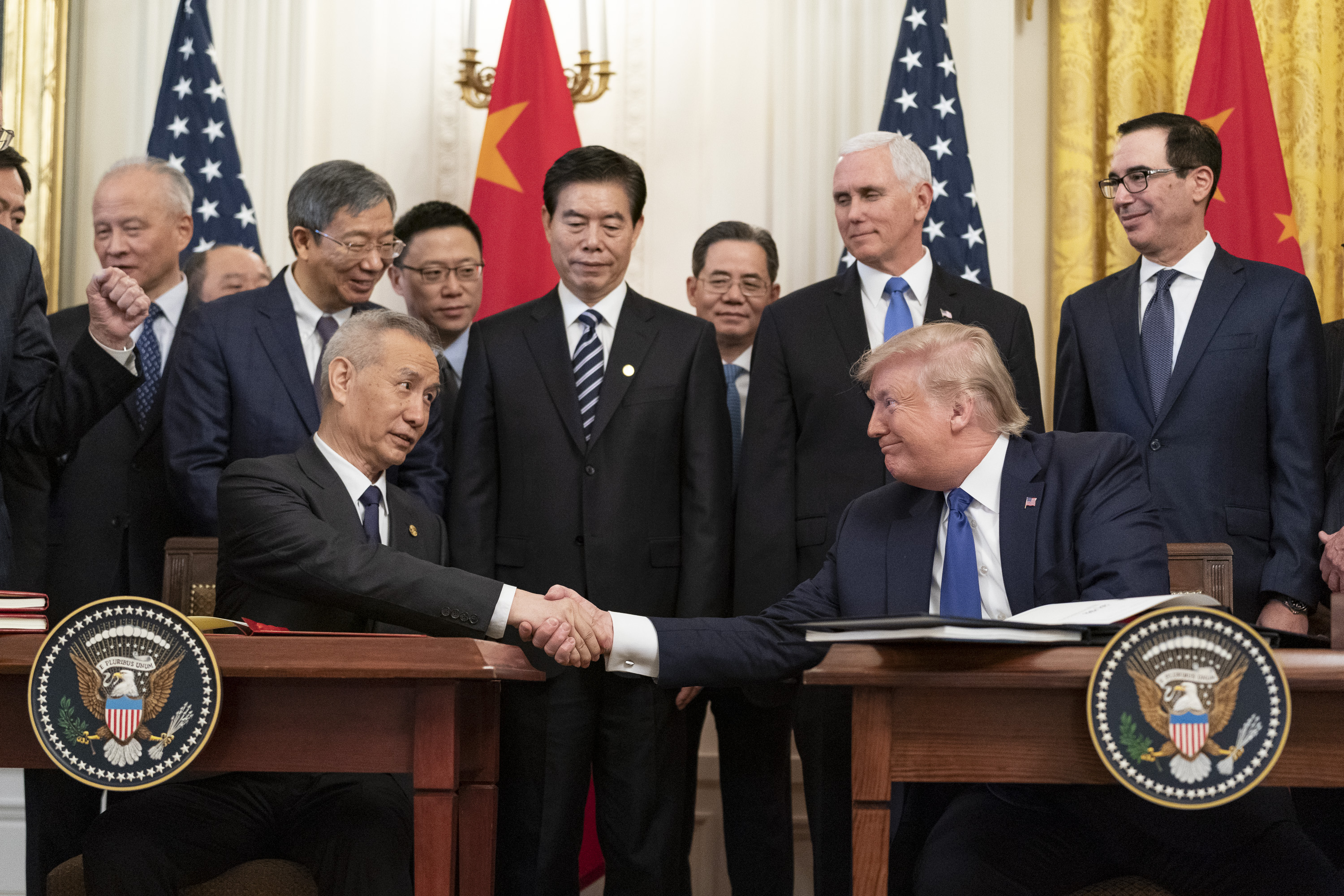
President Donald Trump and the government of Iran reached a preliminary agreement on June 19, 2026 [1], to end hostilities between the two nations.
The deal aims to reopen the Strait of Hormuz for safe shipping and stabilize the global economy [2]. Because the strait is a critical chokepoint for oil and trade, any prolonged conflict there threatens to trigger a worldwide financial crisis.
The preliminary agreement was signed on June 19, 2026 [1], with a formal signing ceremony scheduled for Friday, June 19, 2026 [3], in Geneva, Switzerland [4]. Mediators facilitated the talks to address immediate security concerns and prevent further military escalation.
Trump maintained a stern tone regarding the fragility of the pact. "We could go back to dropping bombs if I don’t like the agreement," Trump said [5]. He previously emphasized the necessity of the deal, and said, "There’s only one way to guarantee the Strait of Hormuz stays open" [6].
While the signing marks a significant diplomatic shift, officials have warned that the agreement is not yet final. Many technical details remain unresolved and will require future negotiations to ensure long-term compliance from both parties.
The New York Times editorial staff said that the interim agreement raises hopes for calming the world economy, but many details remain for future negotiations [7]. The formal proceedings in Geneva are expected to solidify the framework for these subsequent discussions.
“"We could go back to dropping bombs if I don’t like the agreement."”
This agreement represents a tactical pivot to prevent a global economic shock by securing the Strait of Hormuz. While the preliminary signing reduces the immediate risk of war, the lack of finalized details and the president's rhetoric suggest that the peace is conditional and subject to sudden reversal if terms are not met.

'%2F%3E%0A%20%20%20%20%3Crect%20width%3D'1600'%20height%3D'900'%20fill%3D'url(%23v)'%2F%3E%0A%20%20%20%20%3Cg%20opacity%3D'0.08'%20fill%3D'%23ffffff'%3E%0A%20%20%20%20%20%20%3Ccircle%20cx%3D'1420'%20cy%3D'180'%20r%3D'220'%2F%3E%0A%20%20%20%20%20%20%3Ccircle%20cx%3D'1500'%20cy%3D'760'%20r%3D'120'%2F%3E%0A%20%20%20%20%3C%2Fg%3E%0A%20%20%20%20%3Cline%20x1%3D'80'%20y1%3D'172'%20x2%3D'220'%20y2%3D'172'%20stroke%3D'%23ffffff'%20stroke-width%3D'3'%20stroke-opacity%3D'0.6'%2F%3E%0A%20%20%20%20%3Ctext%20x%3D'80'%20y%3D'140'%20font-family%3D'Inter%2C%20-apple-system%2C%20Helvetica%2C%20sans-serif'%20font-weight%3D'700'%20font-size%3D'28'%20fill%3D'%23ffffff'%20letter-spacing%3D'6'%3EHANNA%20%C2%B7%20NEWS%3C%2Ftext%3E%0A%20%20%20%20%3Ctext%20x%3D'80'%20y%3D'230'%20font-family%3D'Inter%2C%20-apple-system%2C%20Helvetica%2C%20sans-serif'%20font-weight%3D'600'%20font-size%3D'40'%20fill%3D'%23ffffffb3'%20letter-spacing%3D'4'%3EWORLD%3C%2Ftext%3E%0A%20%20%20%20%3Ctext%20x%3D'80'%20y%3D'622'%20font-family%3D'Playfair%20Display%2C%20Georgia%2C%20serif'%20font-weight%3D'800'%20font-size%3D'86'%20fill%3D'%23ffffff'%20letter-spacing%3D'-1'%3EItalian%20Tourist%20Dies%20in%3C%2Ftext%3E%3Ctext%20x%3D'80'%20y%3D'721'%20font-family%3D'Playfair%20Display%2C%20Georgia%2C%20serif'%20font-weight%3D'800'%20font-size%3D'86'%20fill%3D'%23ffffff'%20letter-spacing%3D'-1'%3EDominican%20Republic%20Resort%3C%2Ftext%3E%3Ctext%20x%3D'80'%20y%3D'820'%20font-family%3D'Playfair%20Display%2C%20Georgia%2C%20serif'%20font-weight%3D'800'%20font-size%3D'86'%20fill%3D'%23ffffff'%20letter-spacing%3D'-1'%3EFire%3C%2Ftext%3E%0A%20%20%20%20%3Ctext%20x%3D'80'%20y%3D'870'%20font-family%3D'Inter%2C%20-apple-system%2C%20Helvetica%2C%20sans-serif'%20font-weight%3D'500'%20font-size%3D'22'%20fill%3D'%23ffffff66'%20letter-spacing%3D'2'%3Enews.hanna-ai.com%3C%2Ftext%3E%0A%20%20%3C%2Fsvg%3E)
