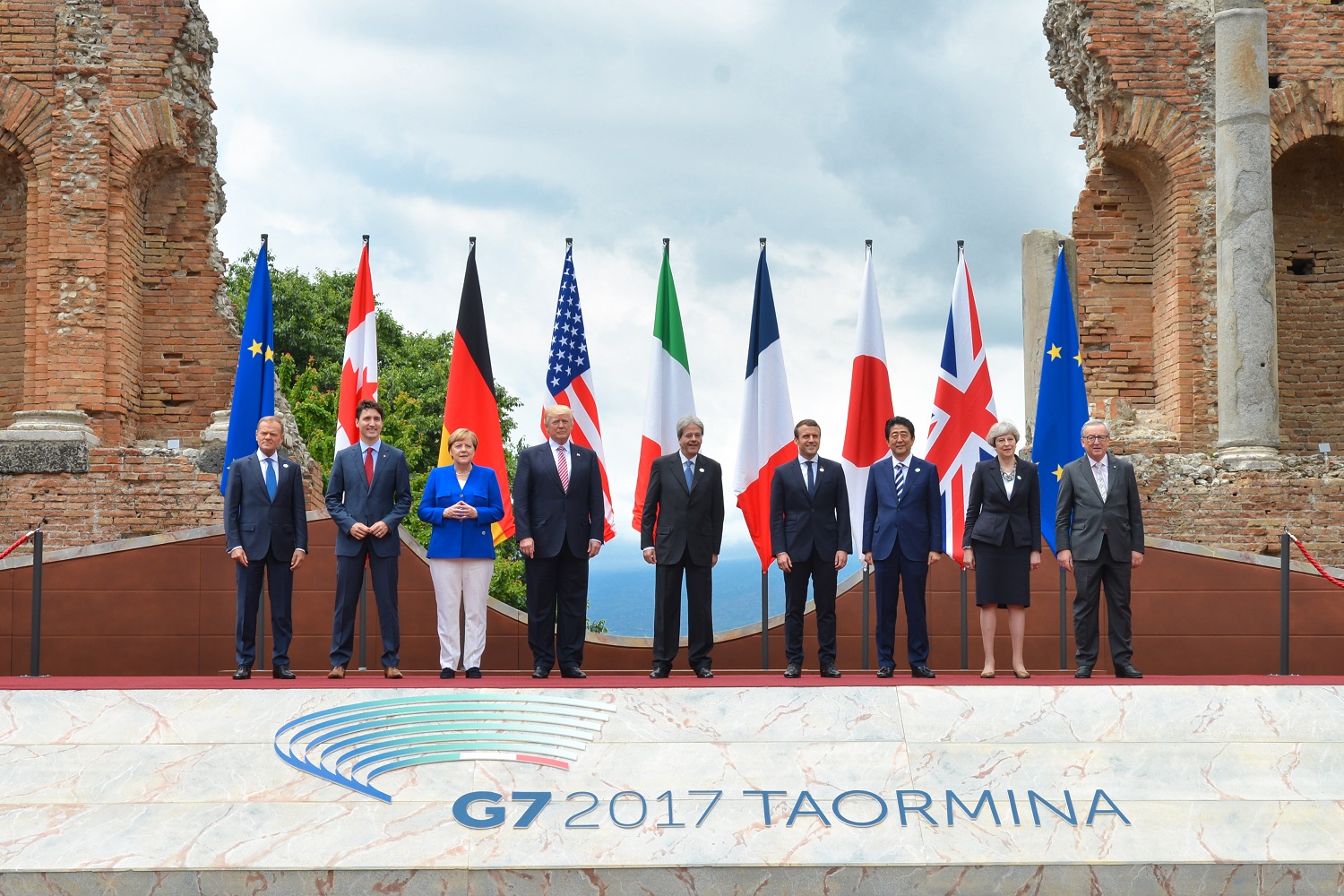
President Donald Trump held a press conference during the G7 summit in Évian‑les‑Bains, France, on June 17, 2026 [1].
The event marks a significant shift in diplomatic alignment, signaling that the U.S. is returning to the shared G7 position regarding the war in Ukraine. This alignment is critical for maintaining a unified Western front against Russian aggression, and ensuring continued military and financial coordination among the world's leading industrialized democracies.
French President Emmanuel Macron highlighted the importance of the meeting. Macron said the G7 summit confirms the return of Trump to the consensus on the war in Ukraine [2]. The press conference served as a public platform to resolve previous tensions and demonstrate a cohesive strategy among the member nations.
Other European leaders have reacted positively to the shift in American posture. Friedrich Merz, who has invited leaders including Macron and UK Prime Minister Keir Starmer to Berlin for follow-up talks, dismissed any remaining friction. Merz said he discards asperities with Trump [3].
The gathering in Évian‑les‑Bains comes at a time when the G7 seeks to synchronize its approach to security and economic stability. By reaffirming this consensus, the U.S. administration aims to stabilize international relations and reinforce the collective security framework that supports Ukraine's sovereignty. The summit's outcomes are expected to influence the trajectory of aid and diplomatic pressure in the coming months.
“The G7 summit confirms the return of Trump to the consensus on the war in Ukraine.”
The realignment of the U.S. with the G7 consensus suggests a pivot away from previous unilateralist tendencies regarding the Ukraine conflict. By publicly committing to the group's shared position, the U.S. reduces the risk of a fractured alliance, which historically encourages Russian persistence. This cohesion is likely intended to project strength and predictability to both Kyiv and Moscow.

